
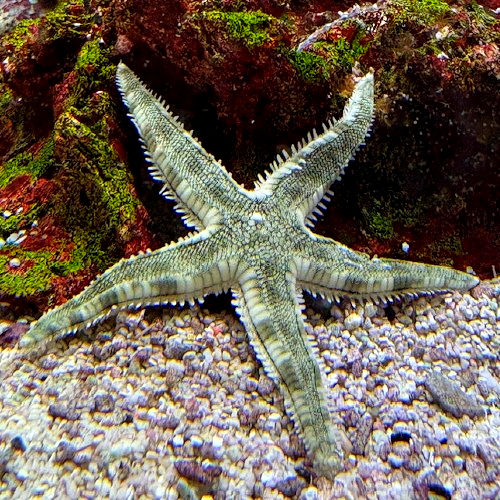
⭐ Sand Sifting Sea Star (Astropecten polycanthus)
⭐ Sand Sifting Sea Star (Astropecten polycanthus)
Marine Detritivore Echinoderm • Voracious Sandbed Predator • Nocturnal Burrowing Species • Advanced / Large-Tank Only
📋 The Sand Sifting Sea Star (Astropecten polycanthus) is a nocturnally active marine echinoderm known for burrowing through and turning over large amounts of substrate as it hunts for food, with an attractive banded pattern of brown and beige across its thick, spine-covered arms.
Native to sandy lagoons and reef flats across the Indo-Pacific, including Fiji and the Solomon Islands, this species spends most of its time beneath the sand, surfacing to actively forage, particularly at night.
We want to be genuinely upfront with you on this one: the Sand Sifting Sea Star is, if anything, too effective at its job. It doesn't just consume detritus and leftover food — it's a voracious, opportunistic predator that will also eat the beneficial microfauna living in your sand bed (worms, copepods, small brittle stars) as well as small shrimp, snails, clams, urchins, and even other starfish. In most home aquariums, it will eventually eat through the available food supply faster than the tank can replenish it, then burrow into the substrate, starve, and decay — a well-documented outcome even in tanks that seemed to be doing fine for months or over a year beforehand. This isn't a species where "reef safe" tells the full story: it won't touch your corals, but it can quietly wipe out your sand bed's ecosystem and your smaller invertebrates along with it.
This species is realistically only suited to a very large, mature, well-established system with an extensive, productive sand bed and a keeper committed to regular supplemental feeding. We'd encourage you to research this species thoroughly and speak with our team before purchasing.
💡 Highlights
🏖️ Powerful Sandbed Processor: Actively burrows through and turns over large volumes of substrate
⚠️ Genuinely Risky for Smaller Systems: Can strip a sand bed of microfauna and then starve
🦐 Will Eat Small Invertebrates: Shrimp, snails, clams, urchins, and other starfish are all at risk
🌙 Nocturnal Activity: Most active foraging happens after dark
🧠 Large, Mature Tank Only: Best suited to advanced keepers with an extensive, established sand bed
🧾 A Quick Look at the Sand Sifting Sea Star
📛 Common Name: Sand Sifting Sea Star (Sand Sifting Starfish)
🔬 Scientific Name: Astropecten polycanthus
👨👩👧 Family: Astropectinidae
🌍 Origin: Indo-Pacific (Fiji, Solomon Islands)
📏 Max Size: Up to 30 cm (≈ 12") across
🧂 Specific Gravity: 1.023–1.025
🌡️ Temperature Range: 22–26°C (72–78°F)
🧠 Care Level: Difficult — genuine risk of sand bed collapse and subsequent starvation
💖 Temperament: Peaceful toward fish
🌿 Reef Safe: ⚠️ Won't harm corals, but will eat small shrimp, snails, clams, urchins, and other starfish
🏠 Min Tank Size: 380 L (≈ 100 gallons)+, with an extensive, mature sand bed at least 6 months established
📌 Tank Level: Lower Level / Substrate Dweller
🧬 Stock Type: Wild-collected as standard stock
⏳ Lifespan: Highly variable; many specimens starve within months to a couple of years even in seemingly stable tanks
🍽️ Diet: Omnivore / Opportunistic Predator (detritus, microfauna, small invertebrates)
🐣 Reproduction: Broadcast Spawner; sexes cannot be visually distinguished, not bred in home aquariums


