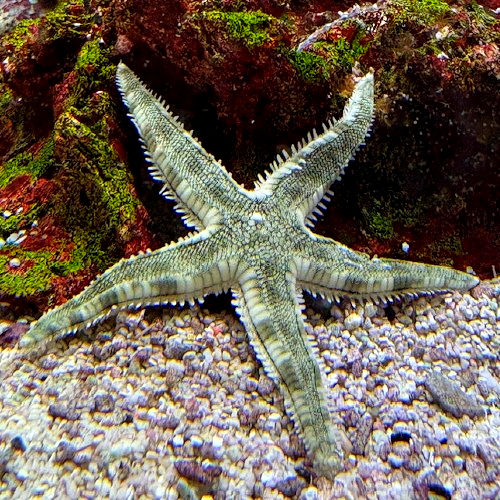
⭐ Blue Sea Star (Linckia laevigata)
⭐ Blue Sea Star (Linckia laevigata)
Marine Detritivore Echinoderm • Iconic Sapphire-Blue Sea Star • Slow-Moving Reef Dweller • Advanced / Specialist Marine Invertebrate
📋 The Blue Sea Star (Linckia laevigata) is one of the most visually striking invertebrates in the marine hobby, instantly recognisable by its brilliant, uniform sapphire-blue colouration and graceful five-armed shape.
Native to shallow reef flats and lagoons across the Indo-Pacific, from the Red Sea to Australia, Blue Sea Stars are a common sight on natural reefs, often found in water as shallow as 1–10 metres and sometimes even briefly exposed at low tide.
We want to be genuinely upfront with you on this one, because it matters for both the animal and your own expectations: the Blue Sea Star has one of the poorest documented survival records of any commonly sold marine invertebrate. Multiple experienced reef keepers and marine biology sources describe its captive mortality rate as "dismal," with community-collected data suggesting a typical captive lifespan of around 1.5–2 years even under attentive care, and many specimens starving within just 6–8 months of purchase. The core problem is nutritional: despite decades in the aquarium trade, nobody has fully identified what this species actually needs to eat long-term in captivity, and the biofilm/detritus/sponge diet available in most home aquariums — even well-established ones — often isn't enough to sustain it. A small number of dedicated reef keepers have kept individuals for 3+ years by hand-feeding specific foods, but this is the exception, not the norm, and requires a genuinely advanced, well-established reef system.
We'd encourage you to research this species thoroughly and speak with our team before purchasing, and to have realistic expectations rather than assuming its striking appearance means it will be easy to keep.
💡 Highlights
💙 Iconic Sapphire-Blue Colouration: Among the most visually striking sea stars in the hobby
⚠️ Genuinely Poor Captive Survival Record: Well-documented, unresolved nutritional challenge
🌊 Reef Safe: Won't harm corals or fish
🧠 Specialist / Advanced Only: Best attempted only in a large, mature, well-established reef system
🔬 Still Poorly Understood: Its full dietary needs remain unresolved even among experienced keepers
🧾 A Quick Look at the Blue Sea Star
📛 Common Name: Blue Sea Star, Blue Linckia
🔬 Scientific Name: Linckia laevigata
👨👩👧 Family: Ophidiasteridae
🌍 Origin: Indo-Pacific (Red Sea to Australia)
📏 Max Size: Up to 30 cm (≈ 12") arm span
🧂 Specific Gravity: 1.023–1.026
🌡️ Temperature Range: 24–27°C (≈ 75–81°F)
🧠 Care Level: Difficult — genuine risk of starvation even in experienced hands
💖 Temperament: Peaceful
🌿 Reef Safe: ✅ Yes — will not harm corals or fish
🏠 Min Tank Size: 200 L (≈ 55 gallons)+, ideally a large, mature system with extensive live rock
📌 Tank Level: Lower Level / Rock & Substrate Dweller
🧬 Stock Type: Wild-collected — accounts for a meaningful share of all wild-collected marine invertebrates in the global aquarium trade
⏳ Lifespan: Commonly 1.5–2 years in captivity even with good care; occasional reports of 3–5+ years with dedicated hand-feeding, but this is not typical
🍽️ Diet: Detritivore (biofilm, algae, sponges, detritus — exact wild diet still not fully understood)
🐣 Reproduction: Capable of asexual reproduction via arm regeneration ("cometing"); not reliably bred in captivity